

Cheeky Logo
Ready To Get Hired?
Apply To Book A Free Call With Our Transition Specialist Team
Menu 12 years of Cheeky Scientist

15 Project Management Concepts That Every PhD Should Understand

PhDs know how to get a project done. 

They know how to juggle different projects, how to prioritize between different experiments, and how to achieve results while managing low budgets.

This leads them to believe that they know everything there is to know about project management. But here’s the thing, project management in academia is very different from project management in industry.

Not understanding this difference leads PhDs to stay unemployed because they don’t know how to react to project management-related questions during the interview process.

If you are thinking that this doesn’t apply to you because you are not looking to be hired as a project manager, think again. 

Questions like ‘How would you improve a given process?’ ‘What is a statement or work?’, Or ‘What is your experience with agile methodology?’ are common in industry. No matter what position you are applying to.

One of our members, who went through our Project Management program, the Project Management Consortium reflected on this after having spent some months in an industry position:

“I had no concept of project management in academia to be honest. It was all focused on publications and presentations. 

But when I started my current position as a Senior Research Scientist, I realized that project management is a big part of any industry position.

In industry, everything is about the business mindset. You need to make money, you need to respect deadlines, and you need to keep the customer satisfied.

So, understanding how you fit into a team and how things stay organized, which is what project management is all about, is pivotal, no matter your position.”

Why Every PhD Should Have Project Management Knowledge

The annual budget of a middle sized company industry is in the range of hundreds of millions of dollars. Big pharma or biotech companies generate billions of dollars worth of annual revenue and can have hundreds of thousands of employees located in dozens of countries.

If you compare those numbers with academia, where the biggest labs operate with budgets of a couple of million dollars per year and have less than 100 people working for them, it should be clear that the level of structure that is required to manage projects and industry is much greater.

Companies have to pay very specific attention to project management if they want to get things done on such a large scale. 

At the same time, there is not a single way of managing projects in industry, every company has its own project management system and specific tools that it relies on.

Of course, each project in industry has a designated project manager whose role is to ensure that the work gets done in time and within budget, but every employee that is part of the project needs to understand the methodology and tools to be successful.

At Cheeky Scientist, we talk a lot about learning the language of industry before you get hired. 

You can’t speak the language of industry if you don’t understand the language of project management. And this is true, no matter what industry position you are targeting.

Here are some project management concepts that you need to get familiar with before you start interviewing for industry positions.

The Phases Of A Project

The way a company manages projects is a huge measure of success, no matter the industry or the size of the project. Therefore, it should come as no surprise that projects in industry go through more phases and involve more steps than we are used to in academia. 

Industry project management considers four project phases – initiation, planning, execution, and closure. In contrast, academia only considers the planning and execution phase, and even those two phases are many times poorly structured

Initiation Phase

The initiation phase is very specific and structured. Its main goal is to define the project. This includes the goal, the scope, and the budget. In industry, all projects must have a monetary value or they will never move to the next phase.

The initiation phase also requires paperwork that is uncommon in academia, such as a project charter. You should be familiar with these terms before you start applying for industry positions as they might come up during the interview.

Before a project can move forward, it has to go through a phase review. During the phase review, the stakeholders assess if the plan is on track and all the documentation is in place. 

Phase reviews happen at the end of each phase, not just the initiation phase. 

Planning Phase

After the project has been justified, described, and approved, the planning part begins. The main objective of this phase is to use the project definition (developed during the initiation phase) to create a plan of action.

This plan has to be approved by all parties involved in it before moving to the next phase. All of this is recorded in the statement of work, which  is one of the most important documents in the life cycle of a project.

Execution Phase

The execution phase is when the actual work gets done. 

Typically, this is the longest phase of the project and can take more than 90% of the project’s lifespan and effort. 

This phase is completed when the defined goals have been reached successfully.
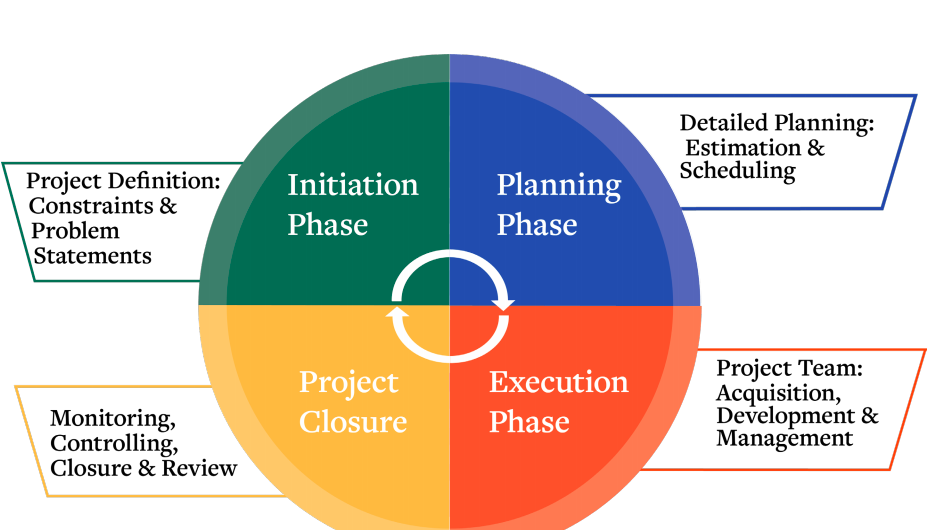
Figure 1: Phases Of Industry Project Management

Closure Phase

This final phase takes place after the final product or service has been delivered. This is the shortest phase in the project life cycle, but it is very important.

The three main goals of the closure phase are to make sure all stakeholders understand that the project is closed, review the lessons learned from the previous projects, and transition to the next one.

Project Management Methodologies

Most project management methodologies were initially developed for information technology (IT) projects. However, many of the associated concepts, practices, and jargon are now used across different industries.

Any PhD wanting to transition into industry needs to have at least some basic knowledge of the main methodologies and the concepts associated with them. 

Waterfall

This is the classic methodology of project management and is the most commonly used in academia.

Waterfall project management is a sequential, non-iterative process made of discrete phases that do not overlap. In this method, you are not allowed to return and change the previous phase.

Think of your PhD: you design an experiment, you execute the steps, you get some data, and it’s only once you have that data, you will know if the experiment worked. 

This is an example of a waterfall project. 

This methodology is very rigid, but it can be very efficient for small, straight forward, and clearly-defined projects.

Agile

The Agile family of methodologies was actually invented by a PhD who noticed that there was a deficiency with the waterfall project management used in academia.

Agile consists of a series of regular and consistent iterations called “Sprints.” At the end of each sprint, the team must deliver results and discuss how the project is advancing.

The Agile methodology aims at discovering what deliverables are needed as early as possible, monitor its progress accurately, and accelerate the learning of the development team.

This methodology works very well for small teams that can easily adapt on a short notice. 

Bigger teams tend to use a combination of Agile and Waterfall, called AgileFall.

AgileFall projects are usually broken into sequential sections, each of which is managed with Agile.

Six Sigma

Six Sigma encompasses a set of techniques and tools for process improvement that is more widely applied to process management.

This approach focuses on eliminating product or service defects. So, it uses quality management methods to improve and optimize the product. 

Lean Six Sigma

This method combines the concept of lean manufacturing with Six Sigma and relies on a collaborative team effort to improve performance by systematically removing waste and reducing variation. It is commonly used in operation management.

If a company uses Six Sigma or Lean Six Sigma, this can come up during an interview, so you will be better off knowing the fundamentals of these methods.

Scrum

This is a type of agile project management that is most commonly used in tech companies. Project iterations are also called sprints, but they are usually shorter than in Agile – around 1 week per sprint.

Scrum focuses on a clear set of goals instead of a specific project part. It’s similar to thinking about what would be the best way to do an experiment that will lead to the best results for publication. 

The goal of this methodology is to study different courses of action (known as alternative analysis in industry). This is something you do naturally as a PhD.

Project Management Tools

Besides the project phases and methodologies, you should also be familiar with specific management terminology.

I’m going to cover the most relevant terms in this blog, but be aware that there are many other terms that industry employees use on a daily basis. 

Gantt Chart

A bar chart that shows all the tasks of a given project. The vertical axis lists the tasks, and the horizontal axis marks the time. 

Some companies love working with Gantt charts, others find it old school. In any case, you should be able to discuss the utility of Gantt Charts during an interview or as part of your industry job. 

Burndown Chart 

A graph showing the relationship between the number of tasks to be completed and the amount of time left to complete these tasks.

This tool is mostly used in scrum and agile project management.

Critical Path Method (CPM)

The critical path of a project represents the longest possible path you can take to complete it. Identifying the critical path allows you to prioritize resources properly. 

The process of identifying the critical path is very similar to finding the limiting factor in an experiment. So, as a PhD, you are wired for this, you just need to understand this is what employers are talking about when you hear the term.

Project Management Blueprint

A document that delineates the goals of a project. Sometimes, it will also describe how the project will contribute to the organizational objective. 

The main difference between a blueprint and a Statement of Work is that the blueprint relates back to the overall corporate strategy.

Business Plan

A written document describing the nature of the business. It is usual to write a new business plan once you start a project. 

Although project managers can write business plans, this usually falls into the responsibilities of the business development manager, a PhD-level position that is highly valued across industries. 

Return On Investment (ROI)

A performance measure used to evaluate projects. It is usually presented as a percentage. 

ROI represents the expected financial gain of a project relative to its total investment and assesses the overall profitability.

Concluding Remarks

If you are committed to leaving academia, you need to start by speaking the language of industry and understanding how industry is structured. This is intimately related to project management. So, no matter what position you are targeting, take some time to understand the basic phases, methodologies, and terms related to projects in industry. The best way to get familiar with this terminology is to network with people working at your target companies, this will help you determine which terms and concepts are more likely to come out during the interview process.

If you’re ready to start your transition into industry, you can apply to book a free Transition Call with our founder Isaiah Hankel, PhD or one of our Transition Specialists. Apply to book a Transition Call here.

ABOUT CHEEKY SCIENTIST

Here's What Others Are Saying

"Thank you for the assistance from the CSA these last couple of months. I was offered the position with a life science investment firm this week and I happily accepted the offer. Growth with the company is guaranteed and I hope that this will be the last time I have to interview in NYC (lol)."

Ilke Roelofse

Ilke Roelofse

"I'm happy to share that I'm starting a new position as Device and Date Scientist at Intel Corporation!"

Darpan Verma

Darpan Verma

Device & Data Scientist

at Intel Corporation

"I finally signed my contract and will be starting soon! I am very happy with the compensation package they have offered me and it meets my expectations."

Indrani Mukrajee

Indrani Mukrajee

Product Manager

at Miltenyi

"New offer - went ahead and signed contract today - - excited and thank you for the confidence booster - grateful for investing in Cheeky Scientist."

Wael Bahnan

Wael Bahnan

Senior Scientist

at Minervx ApS

"Thank you for your support. I greatly benefited from your DD talks on the importance of networking on LinkedIn and resume-building tips. Your team member Meera was very helpful in building my LinkedIn Profile and resume. Thank you!"

 Taranum Sultana

Taranum Sultana

Research Administration

"I got a job offer from a pharma company, which I am going to accept..thank you for your amazing support!"

Gonzalo Rosso

Gonzalo Rosso

Formulation Scientist

at Coriolis Scientist

"I’m happy to share that I started a new position as Medical Science Liaison at Ashfield this January, part of UDG Healthcare (now Inizio) supporting Avita Medical. Thank you to all my mentors, colleagues, and friends who have been incremental in making this dream possible for me.....It is an exciting space/time and I can’t wait for the future."

Mimi Borrelli

Mimi Borrelli

Medical Science Liaison

at Inizio

"I picked the Planet job! It ended up being the better fit for me... Thanks for all of your help!"

Emily Martin

Emily Martin

Hardware Systems Engineer

at Planet

"One thing I feel I did great was joining the association as a Diamond member. Modules and Classes helped me to prepare ahead of the search- to do and to go right. The other useful thing was the accountability forum....your classes and modules really helped me to believe in myself and have confidence in myself. I value myself as a PhD. I gave a shot for a senior scientist position, and got one!"

Nabina Paudyal

Nabina Paudyal

Senior Computational Scientist

at Colossal Biosciences

"I want to notify you I have gotten an industry position...Thank you and Cheeky Scientist for the lessons which made my job search strategy and CV more competitive."

Michael Dioha

Michael Dioha

Senior Energy System Analyst

at Clean Air Task Force

"I just wanted to say that I officially accepted a job! I want to thank everyone at Cheeky Scientist for all the help and support. Overall, my job search went pretty smoothly and I have CS to thank for that. I am now convinced that making connections and networking is how you find jobs, and once I began implementing what CS teaches, I started to see more results. I hope this helps others who are in the job search process!"

Jack Schultz

Jack Schultz

Research Computer Scientist

at Southwest Research Institute

"I accepted my job offer today. I was able to get 5k more + the exact PTO package I wanted. I am very happy and very thankful for everything that I learned through the event. I plan to stay involved with Cheeky Scientist as I love what y'all are doing and I'm still learning."

Tracy Gardner, PhD

Tracy Gardner, PhD

at Pearson

"I am deeply grateful for all the incredible support, professional and personal, I got here and was essential for me to get here. I just completed 4 months at my present company and successfully transitioned, from the training process to working full-time in the team in the team I was hired for, this last week! I never fully thanked Cheeky for all the help they gave me in the training in the job search process, in a way that I was able to realize succes on one of the first jobs I applied for, only a bit more than a couple of months after joining the association. I heard and was told it was possible to have such quick results,but I never believed that it would happen to me; for this I am deeply grateful for you all! Joining CSA was one of the best decision I have ever made, and is something that will still help me for many years to come, for as long as my career goes on!"

Jose Hugos Elsas

Jose Hugos Elsas

Geophysical Researcher

at CGG

"Thank you so much for all the help. I got so much help and inspiration by joining Cheeky!"

Hasala Lokupitiya

Hasala Lokupitiya

Senior Polymer Scientist

at Lyten

"BIG NEWS!! Lufthansa offered me the gig!!"

Marco Milesi

Marco Milesi

at Lufthansa

Similar Articles

Have A PhD And Over 40 Years Old? Better Do This

Have A PhD And Over 40 Years Old? Better Do This

By: Cheeky Scientist

“Isaiah, I’ve got 15 years of experience, a PhD, and more publications than I can count, yet no one seems to want to hire me.  What am I doing wrong?”  I hear this from PhDs over the age of 40 who are struggling to get their foot in the door, and the truth is, your age and experience may be working against you in today’s job market.  Employers, especially younger hiring managers, may see you as overqualified, set in your ways, or not as easily trainable as a younger candidate.  The unfortunate reality is that ageism is rampant in today’s…

Why PhDs Are Mentally Tough (& How They Use It To Get Hired)

Why PhDs Are Mentally Tough (& How They Use It To Get Hired)

By: Cheeky Scientist

“Isaiah, I’m at my wit’s end.  I’ve applied to countless jobs, networked extensively, and still, nothing.  It feels like I’m just spinning my wheels.”  This is a sentiment I hear often from PhDs who are navigating the challenging waters of the job market.  The frustration and mental fatigue are real, especially when you’re used to achieving high levels of success in academia.  But let’s get one thing straight – you are not alone, and this is not the end.  It’s just a bump in the road.  Yes, the job search is grueling.  There’s no sugar-coating it.  But here’s the thing…

3 Entry-Level PhD Jobs Pay Six Figures A Year

3 Entry-Level PhD Jobs Pay Six Figures A Year

By: Cheeky Scientist

I was determined to stay in academia… until I wasn’t.  It took almost six years for me to reach the conclusion that academia just wasn’t for me.  My PhD defense was just a few months away, and I can’t lie: I was literally willing myself to stick it out. But what about after that? Professorship had been the goal for me before I ever even enrolled in college. It had been my dream. I had absolutely no idea what to do if it wasn’t going to teach. I knew what I didn’t want: I didn’t want to be tethered to…

5 Positions In Biopharma Perfect For Any PhD

5 Positions In Biopharma Perfect For Any PhD

By: Cheeky Scientist

It was by chance that I even considered a career in biopharma.  As far as I was concerned, academia was all there was. The world of industry was a big question mark to me, and that was fine. I found myself working on a postdoc, waiting for a tenure-track position to open up.  At first, it was exciting: a real, paying job as a PhD-level scientist. I showed up early, stayed late, and was happy to do it.  But a change happened, gradually. There was so much repetition in my day, and so much emphasis on performing tasks that required…

Top 5 Industry Career Tracks For PhDs

Top 5 Industry Career Tracks For PhDs

By: Cheeky Scientist

From the time I started graduate school, there was only one point in the future that I could focus on: the finish line. I was swept up in my own expectations and also caught up in what I thought was expected of me. But something I hadn’t given much thought to was what I actually wanted to do. I was about six months away from defending my thesis. That’s when I started to give some serious thought to what would happen after I added the “Dr.” to my name. It’s when I began to admit to myself that academia was…

Spin The Hard Knocks Of Academia To Your Advantage To Get Hired

Spin The Hard Knocks Of Academia To Your Advantage To Get Hired

By: Cheeky Scientist

Something that comes up a lot when I talk to new PhDs is that they think they don’t have enough on-the-job experience to apply for the high earning jobs they’re perfect for. I see this imposter syndrome prevent PhDs from even trying to apply for jobs – and puts a stop to their journey to getting hired in industry. So they settle.  For academia, where they don’t have job security.  For jobs that pay less and don’t value their abilities.  For a job they’re not interested in and don’t want, but they think it gets them “started” in industry when…

6 Rewarding Careers In Research Policy, Funding & Government

6 Rewarding Careers In Research Policy, Funding & Government

By: Cheeky Scientist

An indomitable spirit is a rare quality, but not among PhDs. Perseverance is a prerequisite that comes standard with every doctorate.  It seems like there’s no shortage of things that can stand in the way when you’re pursuing a terminal degree. Yet I’ve only met a handful of PhDs who weren’t cut out for the hardships of academia. They made it past the gauntlet of frustrating academic advisors, endless hours in the lab, and year upon year of compounding stress. But there are some things that arise that you simply can’t prepare yourself to push through. Sometimes life happens. PhDs…

Best Of Transition: Ph.D. Jobs & Job Search Strategies January 7, 2023

Best Of Transition: Ph.D. Jobs & Job Search Strategies January 7, 2023

By: Cheeky Scientist

Every week, we at Cheeky Scientist scour the Internet for the best articles on topics that help in the search for the Best of Transition: PhD Job Search in the industry. Our two consultants independently search for the most informative articles in the categories of networking, CVs/resumes, interviews, transferable skills, academic blues, industry positions, and business acumen. Our consultants vote on a top article for each category and a top overall article for the week – if it’s a recent article that can help readers find and acquire PhD jobs, then we want to include it in this weekly digest.…

4 Red-Hot Intellectual Property Positions For PhDs

4 Red-Hot Intellectual Property Positions For PhDs

By: Cheeky Scientist

I just got off the phone with an old friend of mine.  We were researchers at the same lab back in our university days. We had lost touch, but when he found me on LinkedIn I couldn’t wait to hear what he’s done since graduation.  He told me he had not wound up in chemistry, which had been his major. Biomolecular chemistry, he reminded me. Instead, he decided to pursue a career in patent law.  Here’s his transition story: I was in the process of earning my PhD in biomolecular chemistry. That’s where I learned that patents were unrecognized by…

Our Members Get Hired At Top Industry Companies

Answer lab Company LogoCostco Company LogoHome Depot Company LogoSite Bridge Research Company LogoStraight as Gymnastics Company LogoDoor Dash Company LogoTempus Company LogoIntel Company LogoMicrosoft Company LogoGoogle Company LogoEngenius Micro Company LogoPeloton Company LogoAbbvie Company LogoVisa Company LogoDisney Company LogoIqvia Company LogoMeta Company LogoParexel Company LogoIcon PLC Company LogoNetflix Company Logoregeneron Company LogoCoca-Cola Company LogoSanofi Company LogoOxford Nanopore Technologies Company LogoJohnson and Johnson Company LogoBASF Company LogoTesla Motors Company LogoMedtronic Company LogoHouston Methodist Company LogoCDC Company LogoGene Fab Company LogoImmatics Company LogoToyota Company LogoKPMG Company LogoThermo Fisher Scientific Company LogoPfizer Company LogoLumencor Company LogoHuman Genomics Company LogoAmazon Company LogoOdin Vision Company LogoDeloitte Company LogoIsscr Company Logo

Top Industry Career eBooks

Industry Resume Guide for PhDs

Industry Resume Guide for PhDs

Cheeky Scientist

Learn how to craft the perfect industry resume to attract employers. In this eBook for PhDs, you will get access to proven resume templates, learn how to structure your bullet points, and discover which keywords industry employers want to see most on PhD resumes.

20 Skills To Put On Your Resume & LinkedIn Profile

20 Skills To Put On Your Resume & LinkedIn Profile

Cheeky Scientist

Learn the top 20 transferable skills that industry employers ranked as “most important” for PhDs to include on their resumes and LinkedIn profiles. In this eBook, you will learn to start speaking the language of industry so that hiring software algorithms and hiring managers will notice you.

Complete LinkedIn Guide For PhDs

Complete LinkedIn Guide For PhDs

Cheeky Scientist

Learn how to increase your LinkedIn visibility to employers by improving your SSI score and overall LinkedIn connections. In this ebook, you'll be given the tools you need to attract recruiters to you from LinkedIn Recruiter and drive employee referrals.